
Apr. 17, 2026 | Dr Ashwin Drummond
The God of gods and Lord of Lords
The God of gods and Lord of Lords
One of the awe-inspiring names of our God is “King of Kings and Lord of Lords.” It is used to declare God’s authority over all creation and reminds believers of His power and might. Even Nebuchadnezzar, a great and proud Old Testament King, acknowledged God as his sovereign. Daniel:34 “And at the end of the days I Nebuchadnezzar lifted up mine eyes unto heaven, and mine understanding returned unto me, and I blessed the Most High, and I praised and honoured him that liveth for ever, whose dominion is an everlasting dominion, and his kingdom is from generation to generation:”
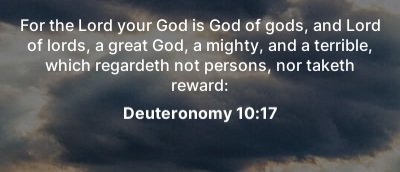
The Bible teaches us about only one God. In Isaiah 43:10, the Lord declares, “Ye are my witnesses, saith the LORD, and my servant whom I have chosen: that ye may know and believe me, and understand that I am He: before Me there was no God formed, neither shall there be after Me.” Further in Deuteronomy 10:17, we find “For the LORD your God is God of gods, and Lord of lords, a great God, a mighty, and a terrible, which regardeth not persons, nor taketh reward:” Isaiah 43:11 states “I, even I, am the LORD; and beside me there is no saviour.”
The emphasis in these two verses is that there is only one God. It emphasises God’s ultimate and sole supremacy. The focus is on God’s greatness and might. When He is called “God of gods,” we understand it as a reference to the God who is more powerful and greater than any other so-called god. The verse does not teach the existence of other real gods. Rather, God says, in Isaiah 45:5, “I am the LORD, and there is none else, there is no God beside me: I girded thee, though thou hast not known me: “Being the “God of gods,” the One True God towers over anything else that might be worshipped. He alone is worthy of worship. The exclusiveness of the claim that God is God is further emphasised in I Chronicles 16:26 “For all the gods of the people are idols: but the LORD made the heavens.” This establishes that apart from the Creator, there are no other Gods as they are all idols. Idols have no power: “All the gods of the nations are worthless”, Psalm 97:7 adds, “Confounded be all they that serve graven images, that boast themselves of idols: worship him, all ye gods.” These and many other passages note that there is only one God. To worship any other God is useless and a cardinal sin.
What about the title “Lord of Lords”? A “lord” (lowercase l) often referred to a leader. To call the Lord the “Lord of lords” emphasises God’s greatness above all other leaders or anyone who holds power. As a result, the psalmist writes in Psalms 136:3 “O give thanks to the Lord of lords: for his mercy endureth forever.” In the New Testament, we find the phrase “Lord of Lords” used on three occasions about Jesus. Paul teaches in I Timothy 6:15 about Jesus that “Which in his times he shall show, who is the blessed and only Potentate, the King of kings, and Lord of lords;” Further in Revelation 17:14 Jesus is described as “He is Lord of lords and King of kings.” “These shall make war with the Lamb, and the Lamb shall overcome them: for he is Lord of lords and King of kings: and they that are with him are called, and chosen, and faithful.” Interestingly, the title “Lord of Lords” affirms the unique power, position, domain, authority and awe of God.
Dr Ashwin Drummond
laddertoheaven.co.in
The God of gods and Lord of Lords
One of the awe-inspiring names of our God is “King of Kings and Lord of Lords.” It is used to declare God’s authority over all creation and reminds believers of His power and might. Even Nebuchadnezzar, a great and proud Old Testament King, acknowledged God as his sovereign. Daniel:34 “And at the end of the days I Nebuchadnezzar lifted up mine eyes unto heaven, and mine understanding returned unto me, and I blessed the Most High, and I praised and honoured him that liveth for ever, whose dominion is an everlasting dominion, and his kingdom is from generation to generation:”
The Bible teaches us about only one God. In Isaiah 43:10, the Lord declares, “Ye are my witnesses, saith the LORD, and my servant whom I have chosen: that ye may know and believe me, and understand that I am He: before Me there was no God formed, neither shall there be after Me.” Further in Deuteronomy 10:17, we find “For the LORD your God is God of gods, and Lord of lords, a great God, a mighty, and a terrible, which regardeth not persons, nor taketh reward:” Isaiah 43:11 states “I, even I, am the LORD; and beside me there is no saviour.”
The emphasis in these two verses is that there is only one God. It emphasises God’s ultimate and sole supremacy. The focus is on God’s greatness and might. When He is called “God of gods,” we understand it as a reference to the God who is more powerful and greater than any other so-called god. The verse does not teach the existence of other real gods. Rather, God says, in Isaiah 45:5, “I am the LORD, and there is none else, there is no God beside me: I girded thee, though thou hast not known me: “Being the “God of gods,” the One True God towers over anything else that might be worshipped. He alone is worthy of worship. The exclusiveness of the claim that God is God is further emphasised in I Chronicles 16:26 “For all the gods of the people are idols: but the LORD made the heavens.” This establishes that apart from the Creator, there are no other Gods as they are all idols. Idols have no power: “All the gods of the nations are worthless”, Psalm 97:7 adds, “Confounded be all they that serve graven images, that boast themselves of idols: worship him, all ye gods.” These and many other passages note that there is only one God. To worship any other God is useless and a cardinal sin.
What about the title “Lord of Lords”? A “lord” (lowercase l) often referred to a leader. To call the Lord the “Lord of lords” emphasises God’s greatness above all other leaders or anyone who holds power. As a result, the psalmist writes in Psalms 136:3 “O give thanks to the Lord of lords: for his mercy endureth forever.” In the New Testament, we find the phrase “Lord of Lords” used on three occasions about Jesus. Paul teaches in I Timothy 6:15 about Jesus that “Which in his times he shall show, who is the blessed and only Potentate, the King of kings, and Lord of lords;” Further in Revelation 17:14 Jesus is described as “He is Lord of lords and King of kings.” “These shall make war with the Lamb, and the Lamb shall overcome them: for he is Lord of lords and King of kings: and they that are with him are called, and chosen, and faithful.” Interestingly, the title “Lord of Lords” affirms the unique power, position, domain, authority and awe of God.
Dr Ashwin Drummond
laddertoheaven.co.in
Tags: One of the awe-inspiring names of our God is “King of Kings and Lord of Lords.”